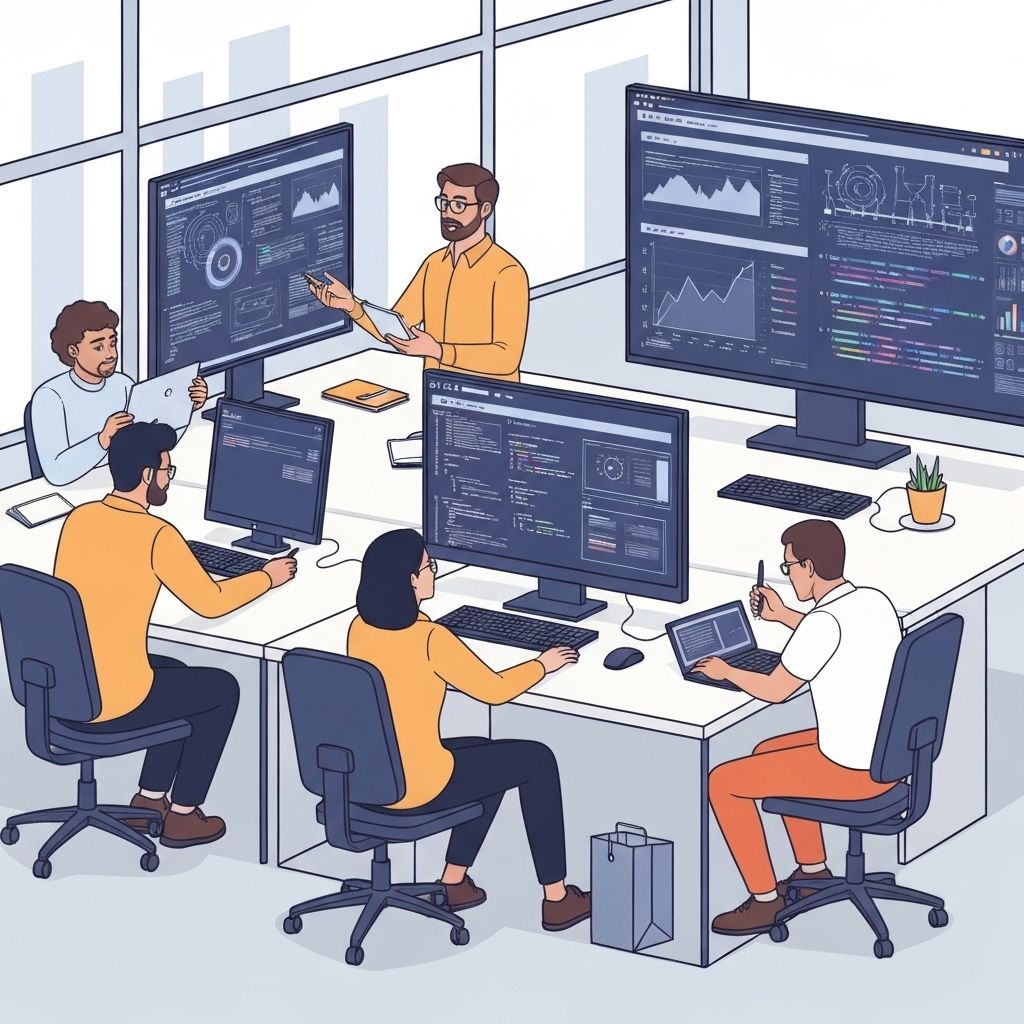
Building Production-Ready LLM Applications: Monitoring, Observability, and Cost Control in 2026
The Vinci Labs Team
Author
The Silent Killer of LLM Applications
You've built the AI feature. It works in staging. Users love the demo. Then you ship to production and watch your OpenAI bill climb faster than your sign-ups.
At The Vinci Labs, we've shipped dozens of LLM-powered features across client projects. The pattern is always the same: engineering teams obsess over prompt engineering but neglect the operational side. Monitoring, observability, and cost control aren't afterthoughts—they're what separate prototype toys from production systems.
This guide covers the LLM ops stack we use to keep applications running reliably without burning through budget.
Why LLM Observability Differs from Traditional Monitoring
Traditional application monitoring tracks latency, error rates, and throughput. LLM applications need all of that plus:
| Metric | Why It Matters |
|---|---|
| Token consumption | Directly correlates to cost; per-user tracking essential |
| Prompt/response pairs | Debug quality issues, not just errors |
| Latency by model | GPT-4o vs GPT-4o-mini vs Claude 3.5 Sonnet have different profiles |
| Context window utilization | Hitting limits causes truncation and quality degradation |
| Hallucination detection | Catch when your model makes things up |
Standard APM tools (DataDog, New Relic) weren't built for these requirements. You need LLM-specific observability.
The Three-Layer Observability Stack
Layer 1: Request Logging and Tracing
Every LLM call should capture:
{
  "timestamp": "2026-05-24T09:15:23Z",
  "trace_id": "trace_abc123",
  "user_id": "user_456",
  "model": "claude-3-5-sonnet-20241022",
  "prompt_tokens": 1247,
  "completion_tokens": 892,
  "total_tokens": 2139,
  "latency_ms": 2847,
  "cost_usd": 0.00489,
  "prompt_preview": "Summarize the following customer feedback...",
  "finish_reason": "stop"
}
At The Vinci Labs, we use Langfuse for open-source tracing and Braintrust for evals. Both capture the full prompt/response lifecycle without vendor lock-in.
Layer 2: Cost Attribution
The biggest shock in LLM production isn't the total bill—it's not knowing which features or users drive costs. Implement per-feature, per-user tracking from day one.
# Cost attribution example
llm_call(
    model="gpt-4o",
    messages=messages,
    metadata={
        "feature": "document_summarization",
        "user_tier": "pro",
        "team_id": "team_789"
    }
)
This metadata lets you:
- Identify your most expensive features
- Set usage limits by user tier
- Make data-driven decisions about model downgrades
Layer 3: Quality Evaluation
Cost control means nothing if response quality degrades. You need automated evaluation pipelines:
Rule-based checks:
- Response format validation (JSON schema, length limits)
- Blocklist checking for sensitive content
- Regex patterns for required elements
Model-based evals:
- LLM-as-judge for relevance, helpfulness, tone
- Embedding similarity to reference responses
- Human feedback collection for fine-tuning
Cost Optimization Strategies That Actually Work
1. Model Routing
Not every task needs GPT-4o. Implement a routing layer:
| Task Type | Model | Cost Savings |
|---|---|---|
| Simple classification | GPT-4o-mini | 96% |
| Creative writing | Claude 3.5 Haiku | 80% |
| Code generation | Claude 3.5 Sonnet | baseline |
| Complex reasoning | GPT-4o / Claude 3.5 Opus | premium |
At The Vinci Labs, we route ~70% of requests to smaller models without measurable quality degradation.
2. Caching Strategies
LLM responses are deterministic given identical inputs. Implement:
- Exact match cache: Hash prompts, cache responses (Redis, Memcached)
- Semantic cache: Use embeddings to find similar previous prompts
- Pre-computed responses: For common queries, generate offline
Caching can reduce API costs by 40-60% for FAQ-style applications.
3. Token Optimization
Every token costs money. Audit your prompts:
- Remove unnecessary system prompt bloat
- Use structured outputs to reduce completion tokens
- Implement response streaming for long outputs
- Compress conversation history (summarization, truncation)
4. Batch Processing
If real-time isn't required, batch requests:
# Process 100 requests in a single batch
responses = client.chat.completions.create(
    model="gpt-4o",
    messages=batch_messages,  # List of message arrays
    max_tokens=150
)
OpenAI and Anthropic both offer batch APIs at 50% discount with 24-hour SLA.
Alerting and Incident Response
Set up alerts for:
| Condition | Threshold | Action |
|---|---|---|
| Cost spike | 150% of daily average | Page on-call |
| Latency p95 | >10 seconds | Investigate model degradation |
| Error rate | >5% | Check provider status, fallback |
| Token usage | >80% of rate limit | Throttle non-critical traffic |
At The Vinci Labs, we maintain fallback chains: if Claude is degraded, we route to GPT-4o automatically. Your users shouldn't know when providers have issues.
The Production Checklist
Before shipping your LLM feature:
- Request/response logging implemented
- Cost attribution by user and feature
- Automated quality evaluation pipeline
- Model routing for cost optimization
- Caching layer configured
- Token limits and truncation logic
- Fallback provider configured
- Cost and latency alerts active
- PII detection and redaction
- Audit trail for compliance
Tools We Recommend
| Category | Tool | Best For |
|---|---|---|
| Tracing | Langfuse | Open-source, self-hosted option |
| Evals | Braintrust | Comprehensive evaluation framework |
| Cost tracking | Helicone | Beautiful dashboards, team features |
| Gateway | LiteLLM | Universal API, routing, caching |
| Prompt management | LangSmith | Iteration and version control |
The Bottom Line
Building with LLMs is easy. Operating them at scale is hard. The teams that win treat observability as a first-class concern, not an afterthought.
Start simple: log every request, track costs by feature, and set up basic alerts. Then iterate toward sophisticated evaluation and optimization.
The companies burning through AI budgets aren't the ones using the most advanced models. They're the ones flying blind.
At The Vinci Labs, we build AI-powered solutions that actually ship — from AI agents and automations to video production and RAG systems. Explore our services or get in touch.